Have you ever come across people who are afraid to spend their hard-earned money because, when they were growing up, they never had the chance to learn that they could spend it on more than just basic amenities?
Who feel like going out for a luncheon is a waste of money, or that buying a nice shirt is an unnecessary indulgence?
Maybe you’ve watched a friend hesitate over a $15 meal at a restaurant, even though they earn a comfortable salary. Or perhaps you’ve noticed someone who hoards every penny, unable to enjoy the fruits of their labor because spending feels inherently wrong.
You might even recognize this pattern in yourself and identify with the guilt that creeps in when you consider treating yourself to something beyond survival.
But the problem is not the person. Their upbringing messed them up.
Research shows that upbringing directly shapes a person’s financial behaviors, primarily by fostering healthy habits, influencing long-term goal planning, and boosting self-esteem.
The financial behaviors carried into adulthood are usually based on the invisible scripts written in the mind during childhood by scarcity, fear, silence, or shame.
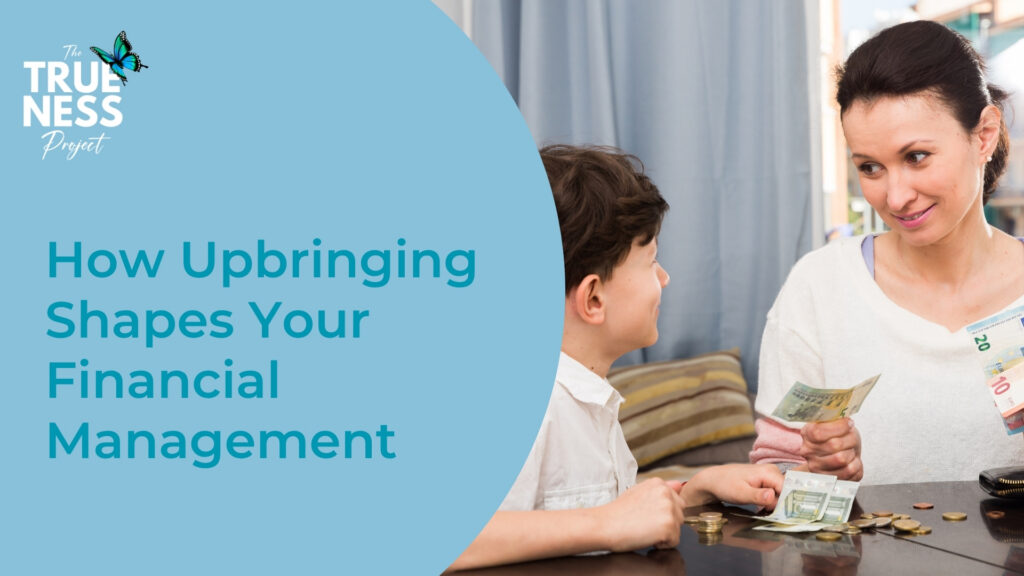
Long before earning a first paycheck, many people absorb lessons about money from the adults around them. They watch how their parents spend, save, worry, and celebrate. They internalize their anxieties, their limitations, and their beliefs about what they deserve.
For many, these early experiences influence financial decisions or even create financial trauma. And that trauma doesn’t simply fade when circumstances improve. It lingers in the subconscious, whispering that safety lies only in deprivation, that joy is frivolous, and that spending is always a step toward disaster.
Understanding how upbringing shapes one’s relationship with money is the first step toward breaking free from patterns that no longer serve.
Understanding Financial Trauma
Financial trauma is the emotional residue left behind by experiences of scarcity, instability, or shame around money.
It’s what happens when a child grows up hearing, “We can’t afford that,” so often that it becomes a core belief about life itself. It’s the panic that rises when a bill arrives, even if there’s enough to pay it. It’s the guilt that follows every purchase, no matter how small.
For some, financial trauma manifests as chronic anxiety, checking bank balances multiple times a day, fearing job loss, or obsessing over savings. For others, it shows up as avoidance, ignoring bills, refusing to budget, or pretending money doesn’t exist. Both are survival responses rooted in the nervous system’s attempt to protect from past pain.
When money becomes a trigger, the subconscious mind equates financial control with survival, and any deviation, spending, investing, or even talking about money, feels dangerous.
How Upbringing Writes Your Money Story
Every family has a money story. Some grew up in homes where money was scarce, and every coin was stretched to its limit. Others lived in households where money was abundant but emotionally charged, used as a tool for control, guilt, or silence.
Some never heard adults talk about money at all, leaving them to fill in the blanks with fear or fantasy.
Children are observant. They notice the tension when parents argue about bills and sense shame when a parent borrows money. They internalize the sighs, the sacrifices, and the unspoken rules.
Over time, these experiences form subconscious beliefs such as:
“Money is hard to get”, “I don’t deserve nice things”, “Rich people are selfish”, among others.
These beliefs become the foundation of adult financial behavior. A person raised in scarcity may become overly frugal, while someone raised in abundance without boundaries may overspend in pursuit of validation. Both are reacting to the same root issue: emotional conditioning.
Financial Avoidance as a Coping Mechanism
Avoidance is one of the most common symptoms of financial trauma.
It’s the refusal to engage with money because doing so feels overwhelming. People who avoid finances often delay opening bills, skip budgeting, or postpone financial planning. They tell themselves they’ll “deal with it later,” but later rarely comes.
Avoidance offers temporary relief but long-term damage.
It keeps individuals trapped in cycles of stress and shame. The irony is that the very act meant to protect from discomfort creates more of it. The unpaid bills pile up, the anxiety grows, and the sense of control diminishes.
Breaking this cycle begins with awareness. Avoidance is a trauma response. Recognizing it as such allows compassion to replace judgment, creating space for healing.
Rewiring the Subconscious Mind
The subconscious mind is powerful enough to store every belief, emotion, and experience related to money.
To change financial behavior, one must first change the underlying programming.
Rewiring begins with awareness.
Start by identifying recurring money thoughts: “I’ll never have enough,” “I’m bad with money,” or “I can’t afford to enjoy life.” These are not facts but inherited beliefs.
Challenge them with evidence. If the mind says, “I’ll never have enough,” ask, “Is that true right now?” Often, the answer is no.
Affirmations and visualization can help reprogram the subconscious. Phrases like “I am safe to spend wisely” or “I deserve financial peace” may feel awkward at first, but repetition builds new neural pathways.
Pair these affirmations with small, intentional actions, such as buying a coffee without guilt, donating to a cause, or investing in a skill. Each act teaches the brain that money can coexist with safety and joy.
Therapy and financial coaching are also powerful tools. A trauma-informed therapist can help unpack emotional triggers, while a financial coach can provide structure and accountability. Together, they bridge the emotional and practical sides of money healing.
Practical Steps to Heal Your Relationship with Money
Healing doesn’t happen overnight, but it starts with one intentional step. Here’s where to begin your journey:
1. Start with self-compassion: Financial trauma is not a personal failure. It’s a learned response to past experiences. Healing begins when judgment ends.
2. Track spending without shame: Awareness is power. Observe where money goes, not to punish yourself, but to understand your patterns.
3. Create a “joy budget”: Allocate a small amount each month for something that brings happiness. This re-trains the brain to associate spending with positive emotion.
4. Practice mindful spending: Before each purchase, pause and ask, “Does this align with my values?” This builds intentionality.
5. Build a support system: Talk about money with trusted friends or mentors. Breaking the silence reduces shame and normalizes financial growth.
6. Celebrate progress: Healing is not linear. Every small step, whether paying off a debt, saving consistently, or spending without guilt, is a victory.
Embrace Financial Freedom
Upbringing shapes financial behavior, but it doesn’t define destiny.
The patterns learned in childhood were survival tools, not life sentences. With awareness, compassion, and consistent effort, it’s possible to rewrite the money story and move from fear to freedom and from scarcity to sufficiency.
Financial freedom means you can now feel safe, calm, and in control when you think about it. It’s the confidence that you can enjoy what you earn without guilt and plan for tomorrow without fear. The beliefs inherited from childhood don’t have to define the rest of your life.
You can rewrite them. True freedom begins when money stops being a source of shame and becomes a symbol of self-trust. That’s when wealth transforms from what you own to how peaceful it makes you feel.