
Youth-led initiatives are one of the key drivers of economic growth, especially in Africa.
Mentorship plays a critical role in nurturing leaders who are capable of pioneering and steering forward such initiatives. And that’s why governments and leadership-focused organizations are investing in leadership training for the youth.
With training, the youth acquire the voice and tools they need to lead with clarity and vision. However, not every young person has access to programs that help them build these skills.
It’s challenging for many institutions and communities to identify practical, intentional ways to nurture young leaders. And that’s why leadership training by leadership-focused organizations is essential.
In this article, we focus on how youth leadership training serves as an asset for the youth and their communities.
4 Components of Youth Leadership Training
Top-performing programs consistently include the below five pillars. Each plays its part in building leaders who are well-equipped to transform communities.
1. Strong Youth–Adult Partnerships
The relationship between young leaders and the adults who support them shapes the entire leadership experience. These relationships are rooted in trust, respect, and mutual learning.
Adults act as guides and collaborators, encouraging the youth to challenge ideas, offer feedback, and take the lead, assuring them that they’ll be supported.
Such partnerships provide mentorship and accountability while affirming the value of youth voice at every level of the program.
2. Skill and Capacity Building
Young people cannot lead without the enabling tools. That is why leadership training must prioritize decision-making and problem-solving as core competencies.
During the training, youth learn how to weigh options, communicate under pressure, manage group dynamics, and act ethically in difficult situations.
These skills are taught through practical simulations, guided discussions, and hands-on leadership tasks. The result? Young people who are ready to face complexity with clarity and courage.
3. Empathy and Self-Awareness
True leadership grows out of empathy and self-awareness.
Through structured service projects and dialogue-based learning, the youth understand who they are, what motivates them, and how they respond to challenges.
They can then understand the lived realities of those around them: poverty, exclusion, inequality, and opportunity.
Such exposure equips them to engage, listen, reflect, and respond, helping them give back to society in a more transformative way.
4. Leadership Opportunities
When you give young people real leadership roles within the programs they’re part of, the organizations they engage with, and the communities they live in, you afford them the authority to lead, make decisions, and take initiative.
Training youth for leadership enables them to think independently and be willing to chart their own path and pursue their inner greatness.
More importantly, it expands their worldview to pursue leadership roles courageously and helps them determine the kind of opportunities they can passionately take up and lead with impact.
How to Develop Youth Leadership Skills
Investing in developing youth’s leadership skills plays a crucial role in the success of youth individually and our society, collectively.
Here are some tested-approved strategies to achieve that:
1. Incorporate strategic thinking
Young leaders grow faster when taught to think beyond the present.
Strategic thinking involves teaching young people how to plan, set long-term goals, analyze complex challenges, and make decisions that consider both short- and long-term effects.
In effective training setups, youth are placed in situations where they must weigh competing interests, consider the broader impact of their actions, and work through structured challenges.
Even basic exercises like community mapping or scenario planning open up this muscle. Strategic thinking gives youth the tools to lead with clarity in uncertain times.
2. Provide Experiential Learning Opportunities
Youth leadership grows through practice. Trainees need to be part of projects that force them to take initiative, make decisions, and reflect afterward.
Simple acts like managing a team of student leadership book co-authors, or leading a peer talk series in the university, or leading a community project can teach far more than classroom lectures.
In these settings, failure becomes a learning point, with feedback becoming a leadership tool. What matters most is giving youth actual responsibility and the room to try.
Leadership training becomes real when it moves from the armchair into the community and starts changing lives.
3. Create Supportive Environments
A supportive environment means having access to mentors, peers, and adults who listen, guide, and challenge constructively.
This support system should offer a consistent presence of someone who checks in, provides feedback, and notices effort.
When young people know that someone believes in their potential and is willing to walk the journey with them, their confidence shifts. These environments should be safe, present, and reliable.
4. Strengthen Communication Skills
Powerful and visionary leaders speak with intention and listen with care.
Leadership training helps youth realize and develop their voice, learn how to express themselves clearly, and understand the power of body language and tone.
A life-changing training should also sharpen their listening skills, how to understand what others are really saying, how to disagree respectfully, and how to build conversations that move things forward.
Young leaders who know how to communicate well often earn the trust of their peers quickly and can rally people around a shared vision.
5. Cultivate a Growth Mindset
Young people need to be taught how to respond to setbacks without giving up. A growth mindset allows them to see leadership not as a talent they either have or don’t, but as a skill they can build over time.
This means normalizing failure, showing them how to reflect after a tough experience, and celebrating progress even when outcomes fall short.
When young leaders are equipped with resilience, they don’t shrink in the face of difficulty. They try again, with better insight.
Impact of Youth Leadership Training on Society
Beyond changing the lives of the trainees, equipping young people with leadership know-how and skills trickles down to the communities, resulting in a more empowered society.
The impact can be felt in various aspects such as:
Networks that Uplift
When young people receive structured leadership training and the support to act on it, they begin to lead in ways that reach far beyond themselves.
At The Trueness Project, we’ve seen this firsthand.
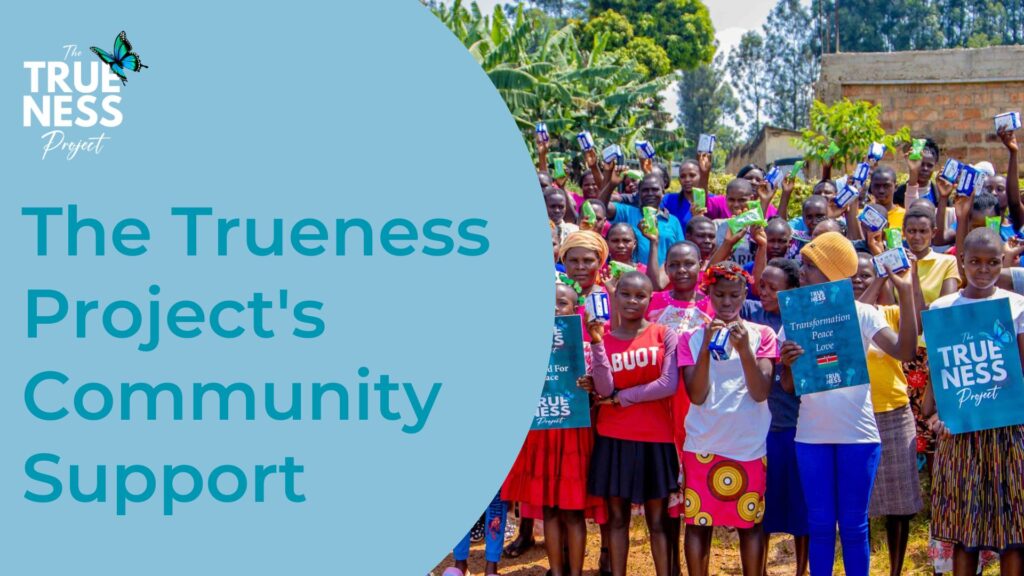
Through our school outreach programs, writing mentorships, and community-building engagements, trained youth have returned to mentor their peers and initiate small service drives, sparking change in their communities.
That’s the strength of a growing network: youth uplifting youth.
Power of Peer Mentorship
Peer mentorship is one of the most effective forms of youth leadership.
Young people who return to their schools and communities as mentors allow their peers to relate easily and willingly take action because they have an example to follow.
Their impact is most visible in how learners begin to believe in themselves again.
Civic Voice
Leadership training builds confidence and urgency.
Many trained youth get into advocacy, speak at public meetings, organize community action, and contribute to policy conversations.
They start leading from the grassroots up, without waiting to be called leaders and allocated titles.
Develop Youth Leaders with The Trueness Project
At the core of The Trueness Project’s leadership mission is the belief that each young person carries a unique story and potential.
Through carefully designed mentorship, handpicked leadership book donations, and storytelling initiatives, we invite participants to explore who they truly are and pursue their greatness.
We are committed to promoting talent, mentoring young people to realize their inner power and share their stories, and partnering with like-minded individuals and organizations to build solid foundations for needy communities.
Over time, we have taught more people how to lead purposeful lives and change themselves and their communities.
It is our shared responsibility to do everything we can to make the world a thriving ground for more people. Would you love to support our mission of empowering more young minds? We urge you to join us on this journey of transformation.
I am a product of transformational youth leadership programs. Keep it up.
Youth leadership training is a life-changing agenda which every serious entity should prioritize.
What an informative article, Trueness. Keep sharing more about this.
This is such great content. I like it.