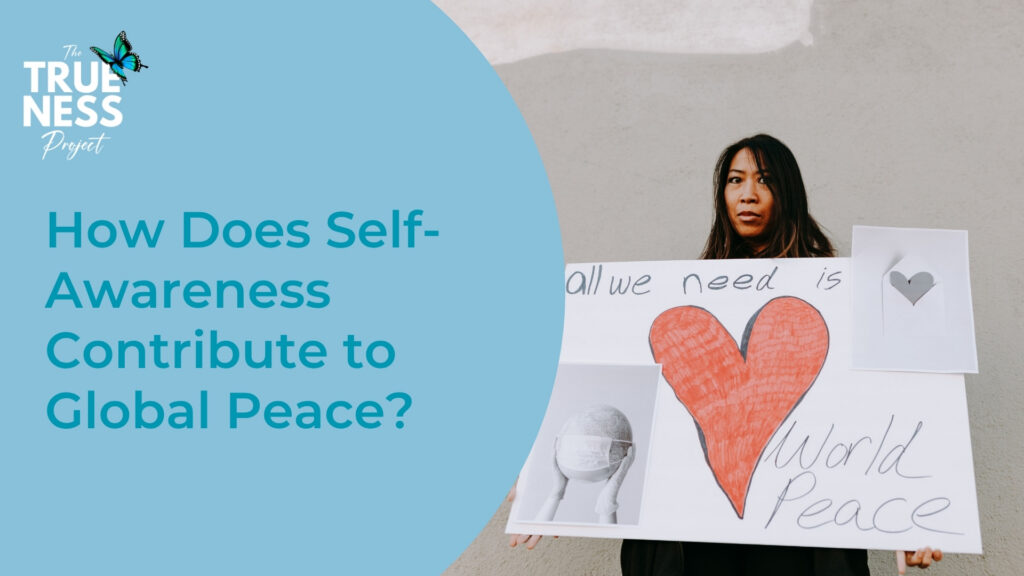
Do you remember how the experience was when you last stopped on your tracks, went back to yourself, immersed yourself in your real self, and sought peace?
UNESCO identifies individual peace as the first pillar of lasting peace, a condition that depends on self-understanding and conscious action rather than wishful thinking.
Self-awareness becomes the invisible architecture of peaceful societies because it helps people recognize bias before it hardens into prejudice, regulate emotion before it becomes harm, and respond with intention instead of reaction.
In that sense, peace is not only negotiated between nations; it is cultivated inside the human mind and heart. When people understand themselves deeply, they create the conditions for understanding others.
The Five Pillars of Self-Awareness
Self-awareness is a layered discipline that helps human beings perceive themselves with greater honesty and less distortion. Here’s how the layers are:
1. Physical Awareness: The ability to notice bodily sensations, stress signals, and somatic responses when conflict rises.
2. Emotional Awareness: Recognizing, naming, and regulating emotions before they escalate into reactive behavior.
3. Mental Awareness: Observing thought patterns, biases, and assumptions that shape how others are perceived.
4. Relational Awareness: Understanding how one’s behavior affects other people and how interpersonal dynamics develop in groups.
5. Spiritual or Values Awareness: Clarity about core values, purpose, and what one stands for beyond ego.
Research suggests these dimensions work together rather than separately, and when individuals develop awareness across all five, they show higher empathy, more ethical decision-making, and stronger conflict resolution capacity.
Why Self-Awareness Matters for Global Peace
Peace studies consistently show that structural violence, inequality, and conflict dynamics shift when individuals become aware of identity, emotion, and power.
Emotional intelligence research confirms self-awareness as a foundational capacity in peacebuilding and conflict prevention frameworks because it helps people see what they are carrying before they pass it on to others.
Self-aware individuals are less likely to project unresolved internal conflicts onto neighbors, colleagues, or strangers, and they are less vulnerable to divisive narratives that depend on fear and simplification.
They are also more capable of perspective-taking across cultural and ideological divides because they can pause long enough to question their first interpretation.
UNESCO emphasizes education as a tool for overcoming fear of the “other,” calling for self-awareness as part of the effort to reduce hate, bias, and structural violence.
When leaders, policymakers, educators, and citizens cultivate self-awareness, the result is not abstract goodwill; it is a ripple effect that reshapes communities and nations.
How to Elevate Your Self-Awareness
Developing self-awareness is both simple and demanding: it begins with attention, but it requires honesty. The good news is that awareness can be strengthened through daily habits that make inner life more visible.
These practices do not remove conflict from the human experience, but they do reduce the chances of turning conflict into harm.
They help people slow down, observe more clearly, and choose responses that align with their values. Over time, they turn reflection into discipline and discipline into character.
1. Reflective Journaling: Write daily about emotional responses, triggers, and patterns. Research shows that structured reflection strengthens emotional regulation and reduces reactive conflict behaviors.
2. Mindfulness and Meditation: Practice observing thoughts and emotions without judgment. Studies link mindfulness to increased empathy, reduced aggression, and improved interpersonal relationships.
3. Seek Feedback from Trusted Sources: Ask colleagues, friends, or mentors how your behavior impacts them. Relational awareness grows when we see ourselves through others’ eyes.
4. Engage in Perspective-Taking Exercises: Deliberately consider situations from viewpoints different from your own, especially those you disagree with. This builds cognitive flexibility essential for peacebuilding.
5. Study Your Triggers and Biases: Identify what situations, words, or people activate defensive or aggressive responses. Understanding triggers allows you to choose responses rather than default to reactions.
6. Commit to Continuous Learning: Read across disciplines, engage with diverse communities, and remain curious about your own blind spots. Self-awareness is not a destination but an ongoing practice.
Intersection of Self-Awareness and Peace
Personal peace and global peace are not separate ambitions; they are connected layers of the same human reality.
The National Peace Academy identifies personal peace, rooted in awareness of one’s authentic being, as the foundation of all other peace spheres, including interpersonal, intergroup, international, and ecological peace.
When people lack self-awareness, unresolved trauma, unconscious bias, and emotional reactivity can leak into decision-making, policy formation, and everyday community interactions.
Peacebuilding frameworks emphasize that self-awareness helps individuals understand identity, bias, and internal conflicts, which are prerequisites for non-violence.
Social-emotional learning research similarly shows that self-awareness is central to empathy, perspective-taking, emotional regulation, and responsible decision-making, all of which are essential for peaceful societies.
This is why self-awareness transforms peace from an abstract ideal into a lived practice, one conversation, one decision, one relationship at a time.
Self-Awareness in Leadership
Self-aware leaders create cultures where psychological safety, transparency, and accountability can coexist without contradiction.
Research on public service leadership identifies self-awareness, including authenticity, integrity, and emotional intelligence, as a core competency that determines whether institutions build trust or breed cynicism.
Leaders who model self-awareness make it easier for others to examine their own biases, communicate more honestly, and engage in constructive rather than destructive conflict.
They also create a tone that invites reflection instead of defensiveness, which matters enormously in settings where power can silence truth.
When policymakers, educators, and community leaders prioritize self-awareness, they shift organizational culture from fear-based to trust-based, and from reactive to reflective.
That shift is not cosmetic; it changes how institutions handle disagreement, accountability, and the public good.
From Individual Awareness to Collective Transformation
Self-awareness is not individualistic navel-gazing; it is a radical act of social responsibility. Every person who chooses self-examination over blame, curiosity instead of judgment, and regulation over reaction contributes to a more peaceful world.
Peace education frameworks reinforce this truth by showing that self-awareness supports ethical decision-making and reduces interpersonal and societal tensions before they intensify.
The 2030 Agenda frames peace as a product of both internal and external conditions, emphasizing that mindsets and values are essential peace-building factors rather than soft extras.
In that light, self-awareness is not a private luxury or a self-improvement trend. It is both the starting point and the sustaining force of global peace.
Know Yourself, Find Peace
Self-knowledge and peace are deeply connected: the more clearly we know ourselves, the more steadily we can create peace within and around us.
Knowing yourself is the pathway to finding peace, personally, in our relationships, and collectively across the world.
Self-awareness is not a luxury reserved for a few but a necessity for anyone who seeks to contribute to a more just, equitable, and peaceful future.
It requires humility, discipline, and courage to see oneself clearly without shame or self-deception. Inner transformation takes patience, but over time it creates profound and lasting effects that shape character, community, and conscience.
Global peace is built by self-aware individuals who choose each day to understand themselves more deeply so they can engage with others more wisely.