
Poverty remains one of the most pressing global challenges, with some communities still living in conditions reminiscent of centuries past.
NGOs, nonprofits, and governments continue searching for ways to break the cycle of poverty. But which strategies can make poverty a thing of the past?
In this guide, we explore seven poverty alleviation ideas for nonprofits that empower communities to create lasting change.
Let’s dig in!
7 Poverty Alleviation Ideas for Nonprofits
Here are the seven ideas that nonprofits can implement to reduce poverty in the communities and countries they serve:
1. Fostering Creativity and Innovation
Some communities remain stuck in poverty because they lack platforms and support to solve their own challenges creatively.
Dependency on external aid can create cycles where solutions are imported rather than generated locally.
Creativity and innovation unlock local potential. When people are encouraged to think differently, they create businesses, services, and technologies that fit their context.
This builds independence, creates jobs, and makes poverty alleviation self-sustaining.
Here are the various ways nonprofits can advance creativity and innovation:
- Host innovation challenges or hackathons where community members present solutions to pressing local problems.
- Set up creativity hubs or maker spaces with tools, computers, and mentorship so people can prototype ideas.
- Offer training in design thinking, problem-solving, and entrepreneurship — equipping people with skills to turn ideas into real solutions.
- Provide seed funding or microgrants for innovative ideas with potential for social impact.
- Partner with schools and youth groups to integrate creative thinking into early education, nurturing problem-solvers from a young age.
2. Supporting Talent Development
In many communities, talent remains undiscovered or underdeveloped. Young people with potential often lack mentors, training, or resources to nurture their abilities.
This leads to wasted potential, limited career opportunities, and generational cycles of poverty.
When talents are discovered and developed, individuals can build livelihoods that align with their strengths, leading to more sustainable careers and higher job satisfaction.
Strategic talent development transforms people from passive recipients of aid into active contributors to their communities.
Nonprofits can implement talent development in the following ways:
- Identify hidden talent early: Work with schools, local leaders, and community groups to spot promising skills — in arts, sports, tech, trades, or leadership.
- Provide mentorship programs: Pair talented individuals with role models who can guide them toward growth opportunities.
- Offer workshops and masterclasses: Create training programs that sharpen skills and introduce new techniques.
- Support access to tools and resources: Provide musical instruments, art supplies, software, or sporting equipment so talent can be practiced.
- Showcase talent publicly: Host exhibitions, talent shows, or online showcases where individuals can gain visibility and confidence.
3. Enhancing Financial Literacy and Independence
Many communities remain in poverty because people lack the knowledge or tools to manage money effectively.
Limited understanding of budgeting, saving, debt management, and investment often leads to financial instability, even when income levels improve.
Financial literacy equips individuals with the skills to make informed decisions, avoid exploitative lending, and build assets.
True poverty alleviation happens when individuals gain control over their finances and can sustain themselves independently of constant aid.
Here are ways nonprofits can enhance financial literacy and independence:
- Offer free financial literacy workshops: Teach budgeting, saving, debt management, and basic investing to empower individuals to make informed money decisions.
- Provide access to financial tools and resources: Distribute budgeting templates, online calculators, and educational materials in multiple languages to reach wider audiences.
- Partner with financial institutions: Collaborate with banks or microfinance organizations to offer low-cost accounts, credit counseling, and financial coaching.
- Support entrepreneurship and skills training: Equip participants with business skills and mentorship to generate sustainable income and build financial independence.
- Create peer-learning groups: Facilitate community savings groups or financial support circles where members learn and hold each other accountable.
- Leverage digital platforms and apps: Use social media, mobile apps, or online courses to deliver engaging, on-demand financial education.
- Provide scholarships and microgrants: Help beneficiaries access training, start small businesses, or pay for crucial needs that improve economic stability.
4. Promoting Access to Education
Lack of access to education is one of the strongest drivers of intergenerational poverty.
Children who cannot attend school because of long distances, school fees, or lack of learning resources are more likely to end up in low-paying jobs, experience poor health, and remain trapped in the same cycle of poverty as their parents.
Education is widely recognized as the most powerful tool to break the cycle of poverty.
Research findings by UNESCO show that each additional year of schooling can raise a person’s earnings by up to 10%.
Beyond income, education improves community health, reduces child marriage rates, and fuels local innovation.
Here are the various ways nonprofits can promote access to education:
- Remove cost barriers: Offer scholarships, grants, or fee subsidies so families can keep children in school.
- Provide resources: Distribute books, uniforms, and digital learning devices so every learner has the tools to succeed.
- Build or support learning infrastructure: Construct classrooms, libraries, or community learning centers in underserved regions.
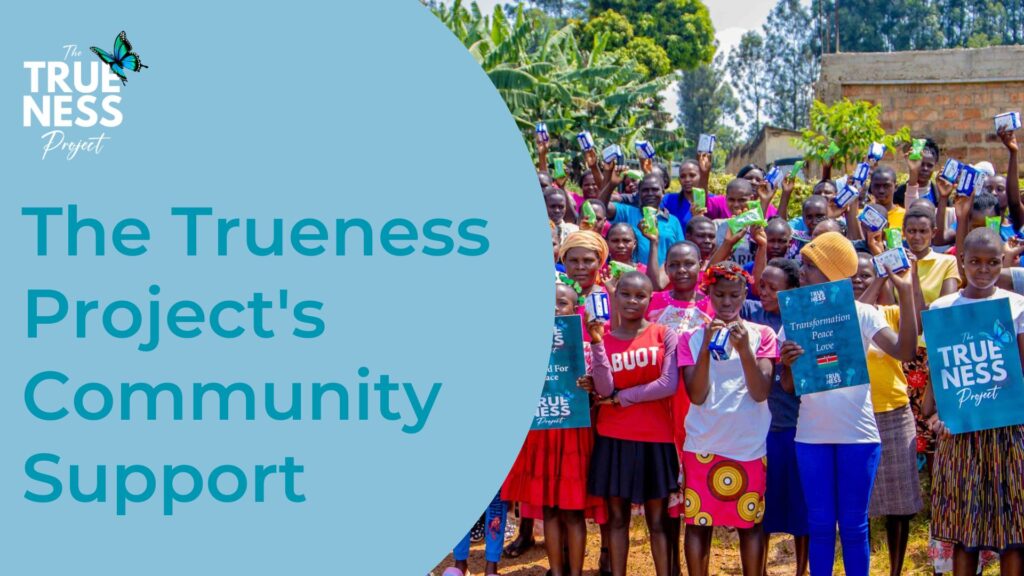
- Support girls’ education: Provide menstrual hygiene products, safe transport, and awareness programs to keep girls learning.
- Offer mentorship and tutoring: Create after-school programs and peer-to-peer mentorship to close learning gaps and boost confidence.
For instance, in Munami Village, Namamali Ward (Western Kenya), the Luena Foundation partnered with Matungu Community Development Charity in April 2025 to fund a US$1,400 bicycle project.
The community contributed an additional $125, and together they provided 25 bicycles to benefit 50 students, mostly girls.
These bicycles drastically cut students’ commute time, improved attendance and punctuality, and made travel safer.
5. Matching Talents with Opportunities
Talent without access is like a seed without soil.
Many people have skills, interests, and potential, but can’t turn them into income or impact because there are no connections (to mentors, jobs, platforms, networks) or opportunities that match their skillsets.
When you match talent with a relevant opportunity, you close the gap between what people can do and what the market or community needs.
This helps people become self-reliant, earn, contribute their skills, and break dependency cycles.
Nonprofits can match talents with opportunities in the following ways:
- Do a skills-mapping exercise in the community: identify what talents exist, what people are good at, and what opportunities (jobs, apprenticeships, gigs) are in or near the community.
- Build or partner with platforms or networks that connect talent with opportunities, including local businesses, employers, or NGOs that need skills.
- Offer mentorship or internship programs where talented youth shadow professionals or work on real projects.
- Facilitate competitions, showcases, or expos where talent can display their skills, get visibility, and be recruited.
- Provide soft-skill training (communication, professionalism, negotiation) so people are ready when opportunities arise.
6. Strengthening Community Leadership
Often, communities lack effective, inclusive governance and local leaders who can advocate, mobilize resources, and steer development.
Strong community leadership ensures decisions about projects reflect real needs, fosters trust, ensures accountability, and enables sustainability.
When leadership is unrepresentative, non-transparent, or disconnected from people’s needs, poverty alleviation efforts fail or don’t stick.
Inclusive leadership lets women, youth, and marginalized people contribute, which broadens participation and makes initiatives more resilient.
To strengthen community leadership, nonprofits can:
- Provide leadership training for local leaders, including women and youth, with modules on transparency, conflict resolution, inclusion, and resource mobilization.
- Facilitate community forums or assemblies where people can voice their needs, give feedback, and participate in decision-making.
- Build alliances with traditional leaders, local councils, or existing governance structures to integrate bottom-up and top-down leadership.
- Offer mentoring or peer networks for leaders to share best practices, challenges, and gain support.
- Promote shared leadership models (co-leaders, committees) so leadership is not concentrated.
7. Creating Supportive Spaces
Lack of safe, inclusive environments where people (especially youth/women/marginalized groups) can grow, learn, connect, and access resources is a barrier.
Without supportive physical or social spaces, people have less chance to develop, network, and access services.
Supportive spaces (physical or virtual) build belonging, reduce isolation, provide spaces for learning, creativity, social support, and empowerment.
They become hubs for transformation—places where people can try, fail, learn, and grow with safety.
Some of the ways nonprofits can create supportive spaces include:
- Creating youth centers, community hubs, or safe places where people can gather for training, mentorship, creativity, and social connection.
- Ensuring the space is inclusive (gender, disability, social background), safe, accessible, and welcoming.
- Offering a mix of programs: arts, digital literacy, counseling, peer support, civic engagement, sport/leisure.
- Involving communities in designing these spaces so they meet real needs.
- Supporting virtual spaces (online forums, learning groups), especially where physical meetings are hard.
How The Trueness Project Is Alleviating Poverty
The Trueness Project is actively combating poverty by embracing these strategies:
Financial Literacy and Management Training
The worst kind of poverty is the one embedded in the mind.
We have been empowering young people on how to monetize their skills and talents, budget for their income, and also pursue other income streams.
This positions them as skilled and ready-to-work individuals, making them assets to their families and communities.
Talent and Creativity Support
There’s no more fulfilling way of living than in making a living from what you know and love most.
At The Trueness Project, one of our commitments is to give hand-ups to those we serve. This means that we help them realize the immense potential in their God-given abilities, and point them to the greatness yonder.
By believing in them, we have always created a thriving environment of self-belief, lighting the spark and setting them on the move towards their best self.
Introducing Launchpad Programs
Our introduction of the Book Writing Initiative, popularly known as Write With Trueness, has been a successful tool in giving young people a platform to tell their stories.
As they co-author books and interact with our trainers and partners, we are actively broadening their worldview.
By building and certifying their name as critically-acclaimed bestsellers, we are positioning them to write their own books, market them, and earn from them.
We are also transferring the book-writing skills to them, which they can monetize by writing and editing books for others, including high-ticket clients, putting money into their pockets.
Book Donations
The Trueness Project has always held firmly onto the belief that a single book in the hands of a curious mind can break the chains of poverty for generations.
That is why book donations remain an integral part of our fight against poverty.
Through our strategic partnership with the Kenya National Library Service, we have donated over 1,250 well-selected classics, such as Think and Grow Rich and The Richest Man in Babylon, among others.
Our aim is to empower the mind, displace poverty mindsets, and shift the mind to abundance mode, preparing it to think about money, make money, and save money, regardless of where our target beneficiaries come from or live.
Together, We Can End Poverty
Would you like to join us in fighting against the pangs of poverty and setting generations free by empowering them and giving them the tools to launch their dreams?
There are multiple ways you can join hands with us and support the continuity and broader impact of our programs.
Whether you would love to donate copies of your book to us so that we can distribute it to a wider, genuinely needy audience, or you desire to donate in support of any of our programs or connect us with a potential partner, we welcome your goodwill and support.
You’d also enjoy volunteering as a mentor or coach during one of our youth leadership mentorship sessions.
By pooling efforts, we stand a firmer potential to transform more lives and build a thriving generation ready to tackle insufficiency and stand for its great future.