
National libraries are public institutions where ideas are preserved, questioned, and passed on across generations. In countries where leadership gaps persist and readership continues to decline, libraries remain one of the few public institutions with the capacity to influence both at scale.
Readership grows where systems intentionally protect access to books, reading spaces, and learning culture. National libraries play this role by anchoring reading within public life as a right, not a privilege.
Consistent access shapes how people think, communicate, and lead.
Leadership culture emerges from environments that encourage curiosity, critical thinking, and reflection. Libraries create such environments by offering safe spaces for learning, dialogue, and exposure to diverse perspectives.
Their influence extends beyond reading habits into how individuals understand responsibility, service, and decision-making.
For organizations working in education, youth development, and leadership formation, national libraries are strategic partners in shaping informed, reflective, and ethical leadership for the future.
Let’s discuss further!
Readership vs Leadership
Readership is the discipline of engaging with ideas beyond one’s immediate experience. Leadership is the responsibility of making correct decisions that affect others.
The bridge between the two is understanding. Many leadership gaps visible in institutions, communities, and public life can be traced back to weak reading cultures.
A reader learns to sit with ideas before acting on them. Leadership demands the same discipline. Where reading is shallow or absent, leadership often becomes reactive, loud, and short-sighted.
Readership builds the habit of listening before responding. Leadership requires the same skill. A person who reads widely is exposed to multiple perspectives, histories, and outcomes.
This exposure reduces the urge to lead through impulse or ego. It encourages reflection, context, and informed decision-making.
In contrast, leaders who don’t value reading tend to rely on repetition of slogans, borrowed opinions, and surface-level thinking. Their leadership struggles with complexity and rarely sustains long-term impact.
National libraries sit at this intersection, making reading accessible, structured, and intentional. They provide pathways to knowledge. They are training grounds for patient thinking, critical reasoning, and ethical judgment, which are leadership essentials.
Let us explore how libraries achieve this task.
5 Ways Libraries Create Literate Environments
1. Access to Diverse, Relevant Reading Materials
National libraries are repositories of collections that reflect society in its breadth. Academic texts, local literature, children’s books, policy documents, and creative works sit side by side. Readers are exposed to different disciplines, cultures, and perspectives, which expands thinking and builds intellectual confidence.
2. Safe, Inclusive Spaces for Learning and Reflection
Libraries provide neutral spaces where age, background, or income do not determine access to knowledge. Quiet reading areas, group study rooms, and public learning spaces allow individuals to engage with ideas without distraction. Such environments encourage focus, discipline, and reflection, qualities that are essential for deep reading and thoughtful leadership.
3. Support for Research, Inquiry, and Critical Thinking
Through reference services, archives, and guided research support, libraries train users to seek evidence, question sources, and synthesize information. These skills transition readers from consumption to analysis. Literate environments are built on the ability to interrogate what is read and apply it responsibly.
4. Digital Literacy and Information Navigation
Modern national libraries play a vital role in helping users navigate digital information, keeping them abreast of today’s digital dynamics. Think of access to online databases, e-resources, and digital archives. Leaders who emerge from such environments are better equipped to beat misinformation and make informed decisions.
5. Hosting Engaging Programs and Learning Events
Libraries also cultivate literacy through storytelling sessions, reading clubs, author talks, writing workshops, and public lectures. These programs normalize intellectual curiosity and lifelong learning. They also create spaces where ideas are discussed, challenged, and refined, reinforcing both readership and leadership development.
How Reading Makes You a Better Leader
Leadership is formed and shaped through how one thinks, listens, decides, and responds to issues affecting them and the public. Reading plays a decisive role in that formation.
Reading strengthens judgment
Leaders are often required to make decisions with incomplete information, competing interests, and real consequences. Regular reading exposes the mind to multiple perspectives, histories, and outcomes.
Over time, this trains leaders to pause, weigh context, react less, and choose wisely.
It Builds Depth of Understanding
Reading develops the habit of going beyond the surface. It teaches leaders to ask better questions, understand systems, and recognize patterns. This depth allows leaders to address root causes on time.
It Improves Communication
Leaders are constantly communicating vision, direction, and values. Reading expands vocabulary, refines expression, and improves clarity of thought. Leaders who read regularly tend to explain complex ideas more simply and speak with precision.
Reading Cultivates Empathy
Stories, biographies, and lived accounts allow leaders to tap into experiences beyond their own. This exposure sharpens emotional intelligence. Leaders who read are often better listeners because they have learned, through text, how different realities shape behavior and choices.
It Encourages Self-Leadership
Before leading others, one must learn to manage discipline, focus, and growth. Reading requires patience, reflection, and consistency. These same traits are essential for credible leadership. A leader who reads is often willing to learn, unlearn, and grow.
Partnering with National Libraries for Broader Impact
Partnerships between national libraries and community-serving organizations are key to expanding access to knowledge and cultivating leadership.
Libraries hold resources, expertise, and networks, while community organizations understand local needs and how to translate information into impactful growth. By combining these strengths, these entities create a powerful ecosystem where learning, mentorship, and leadership thrive.
At The Trueness Project, we recognize how national libraries are gateways to knowledge, culture, and leadership development. And that is why we are partnering with them across Africa.
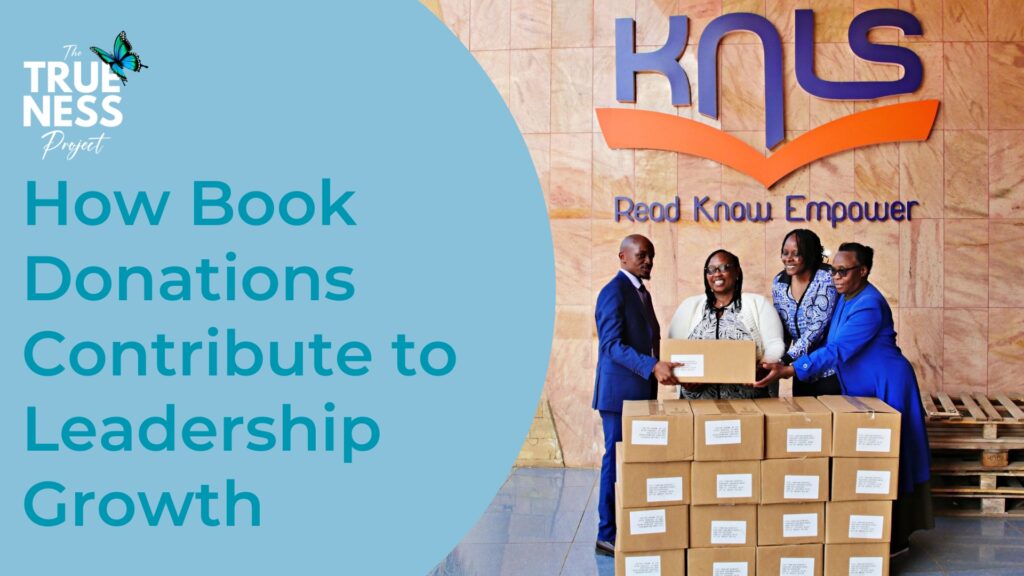
Our partnership with the Kenya National Library Service (KNLS) has been a cornerstone of this vision.
Through this collaboration, our book donations have been redistributed to satellite libraries across the country. This has ensured that communities at the grassroots level, often overlooked, gain access to reading materials that can transform their perspectives and opportunities.
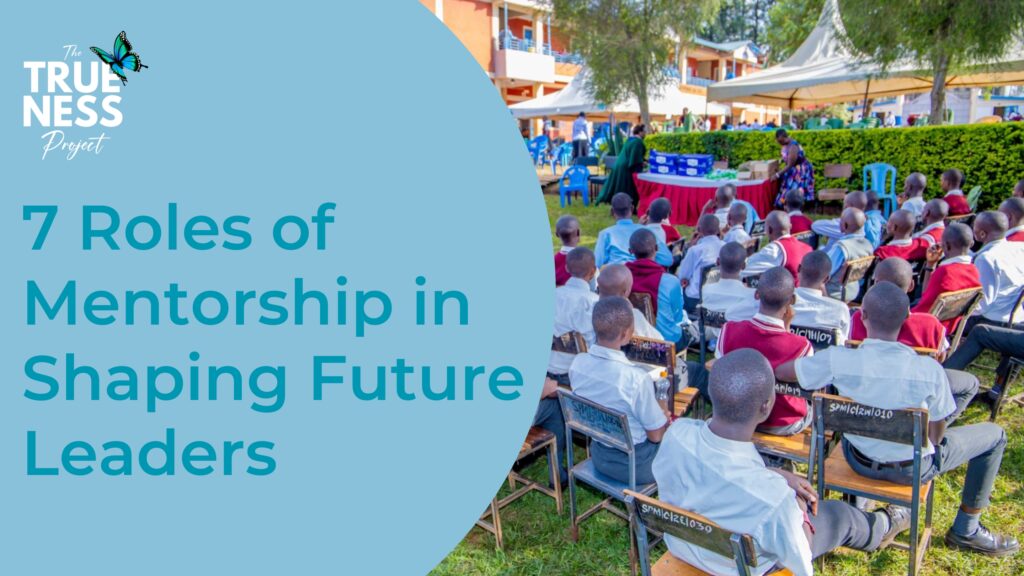
The impact extends beyond book distribution. By engaging national and local libraries, we create spaces where youth can encounter leadership ideas, participate in mentorship programs, and connect with peers and mentors through networking sessions.
These libraries serve as hubs where potential leaders find the tools to grow.
We are expanding our efforts across Africa through visits and partnership discussions with other national libraries.
By having them as the central recipients of our book donations for nationwide redistribution, we are exploring ways to replicate successful models and extend the reach of our programs.
Libraries are the best avenues for nurturing communities that value learning, reflection, and leadership. By leveraging these institutions, The Trueness Project is helping shape environments where young people can read, reflect, and lead.
Promote Readership and Leadership with The Trueness Project
The journey from reading to leading is one that no individual or organization has to walk alone.
At The Trueness Project, we are building bridges between knowledge and leadership, and we invite community service enthusiasts, nonprofit leaders, donors, book authors, publishers, educators, and youth mentors to join us in this mission.
Every book you donate, every mentorship session you facilitate, and every leadership journey you share contributes to creating a culture where young people are empowered to think, act, and lead purposefully.
We also call on librarians and national library systems across Africa to partner with us. Together, we will expand the reach of programs, distribute books more effectively, host interactive learning events, and create spaces where young leaders emerge from communities that are often underserved.
These partnerships allow us to touch more lives, transform more communities, and ultimately build a continent-wide culture of readership and leadership.
Your involvement matters. By collaborating with The Trueness Project, you are investing in a future where access to books, mentorship, and leadership development is not a privilege, but a shared opportunity for all.
Join us in building a movement of readers, teachers, and leaders, and creating communities that are not only literate but empowered, resilient, and ready to lead the change Africa deserves.
Alternatively, freely explore the various ways you can get involved in The Trueness Project programs.