We are not short of leaders.
Look around any institution, initiative, or community space. Titles exist, positions are filled, panels are hosted, and speeches are given.
Yet something is still off.
If leadership were truly working the way it is often presented, many of the challenges we face would not persist with such stubborn consistency. Schools would not struggle to access basic learning resources.
Young people would not remain disconnected from opportunity. Justice would not be as elusive. Communities would not wait endlessly for change that always seems delayed.
So the question is not whether leaders exist; it is whether we are raising impact-driven leaders who understand responsibility beyond visibility and who lead with empathy and emotional intelligence.
Leaders who can recognize real problems, stay long enough to understand them, and commit to doing the difficult work of changing them.
Leadership that transforms communities is built with intention and shaped through exposure, guidance, and experience. It demands more than confidence or charisma. It requires clarity, discipline, and a deep sense of purpose.
And that is why, if we want different outcomes in our communities, then we must rethink how we identify, develop, and support those we call leaders. Not for recognition, but for responsibility and impact for all, that can be felt by all.
Now let us dig deeper.
Why Community Impact Must Be the True Measure of Leadership
Leadership has been made too comfortable.
It is often measured by visibility, how well someone speaks, their number of followers, or by how frequently their name appears in conversations that sound important. But none of these, on their own, tell us whether a leader is effective where it matters most.
Their impact on communities is the true measure.
A leader’s work becomes clear in the lived realities of the people around them. Are young people gaining access to opportunity? Are schools becoming better equipped? Are systems improving in sustainable ways? These are the real indicators of whether leadership is doing its job.
Community impact requires leaders to move closer to problems. It demands listening before action, understanding before solutions, and accountability long after the initial excitement fades.
This is not the easier path. It is the necessary one.
Because if leadership cannot be traced in the progress of a community, then it becomes difficult to defend its value.
The Leadership Gap
Ever wondered why many leaders fail to create lasting change?
It is not because they lack intelligence or passion. In many cases, they have both in abundance.
The gap appears after the applause fades.
Many leaders are trained to present ideas, not carry them through resistance. They are taught how to speak about change, yet rarely placed in environments where change must be tested, adjusted, and sustained. The result is strong beginnings, visible energy, then decline when complexity sets in.
At the center of this gap is the truth that delivery is harder than vision. It is easier to gather people around an idea than to stay when that idea meets real conditions.
Communities do not respond to intention alone. They respond to consistency and leaders who return, adjust, take responsibility when outcomes fall short, and continue when recognition disappears.
Another dimension of the gap is distance. Too many leaders operate far from the realities they claim to address. Decisions are made without context, and solutions built without lived understanding. Over time, efforts appear structured but fail to connect.
Then there is guided growth. Leadership is often assumed rather than developed. People are given responsibility without mentorship, exposure without reflection, and expectations without support.
This is how the gap widens.
Leaders emerge, but few are prepared to deliver outcomes that endure. Initiatives begin, but many struggle beyond early momentum. Communities engage, then disengage when results fail to match promises.
Closing this gap requires an approach that builds capacity before visibility and values responsibility over performance. One that measures leadership by what is actually delivered.
Because communities do not remember how confidently someone began.
They remember what changed.
The 3 C’s of Impact-Driven Leadership
If leadership is going to move from intention to results, it must rest on foundations that can withstand pressure. Three qualities consistently separate leaders who start from those who sustain:
1. Clarity
Impact-driven leaders are clear about the problem they are solving. They understand the people affected, the real context, and the specific change required. Without clarity, effort becomes scattered and impact becomes accidental.
2. Character
Character is what holds leadership together when pressure rises. It shows in decisions made when no one is watching and when shortcuts are available. Communities trust leaders whose actions remain consistent even when outcomes are uncertain.
3. Commitment
Commitment is the difference between starting and finishing. Real community work takes time, patience, and consistency. Leaders who commit stay long enough to see progress take shape, even when results are slow.
Together, these three define whether leadership produces visibility or lasting change.
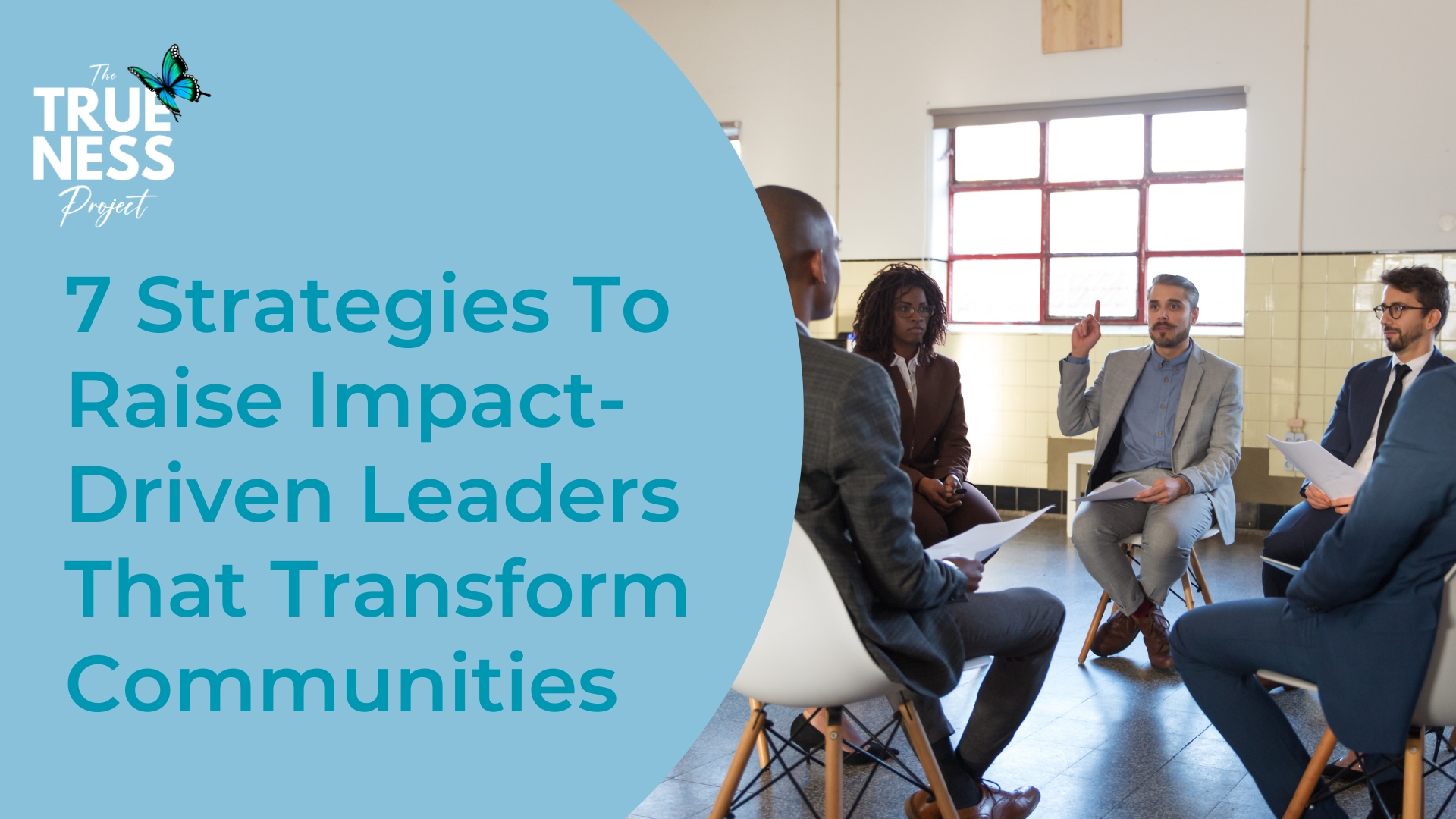
7 Practical Strategies for Raising Impact-Driven Leaders
If we are serious about raising leaders who can deliver, then development must move from theory into lived experience. That is where these strategies come in handy:
1. Expose Leaders to Real Community Conditions Early
Understanding begins with exposure. Real environments shape thinking in ways theory cannot. When young leaders interact with actual community challenges early, they stop imagining problems from a distance and start understanding them in context. This grounding becomes the foundation for everything that follows.
2. Build Leadership Through Service
Leadership must be rooted in responsibility, not recognition. When individuals learn to serve without visibility, their relationship with leadership changes. The focus on positions and titles fades and they embrace the power of contribution. Service builds humility, discipline, and a stronger sense of purpose.
3. Prioritize Consistent and Demanding Mentorship
Guidance must be consistent, honest, and intentional. Mentorship should challenge thinking, correct direction, and push leaders beyond comfort. Without it, growth becomes self-directed and often limited.
4. Create Space for Ownership
Emerging leaders must be given real responsibility with real consequences. Ownership forces decision-making, accountability, and independence. It is through ownership that confidence becomes tested and leadership becomes real.
5. Allow Failure, Then Demand Reflection
Failure is part of development, but only if it is processed. Leaders must be guided to reflect deeply on what went wrong, what they missed, and what must change. Reflection turns experience into growth instead of repetition.
6. Invest in Tools That Expand Thinking
Books, learning systems, and access to knowledge expand how leaders interpret the world. Exposure to ideas sharpens judgment and improves decision-making. Without intellectual tools, leadership becomes reactive instead of thoughtful.
7. Build a System, Not a Moment
Leadership development must follow a structured pathway. Identification, preparation, mentorship, application, and release must be connected. Without a system, development becomes inconsistent and dependent on chance. With a system, leadership becomes repeatable, intentional, and sustainable.
Understanding The Trueness Project’s Leadership Training Model
The Trueness Project’s leadership training model is built on the idea that transformational leadership is developed, and that youth leadership training is key if we want future success.
We believe that leadership should be taught from an early age, and that is why our focus is on the young people in high school, higher learning institutions, and recent graduates.
In our approaches, we begin by identifying a small group of young people who show consistency, responsibility, and willingness to serve.
Once identified, we equip them with leadership books and learning resources that shape how they think about responsibility and community work.
Then we take time to mentor them in a structured way. This stage builds discipline, strengthens thinking, and develops decision-making over time.
Then comes practical leadership. Beyond giving them scenarios, we now call upon them to take up real responsibilities in their communities, such as mentoring a small group of people or contributing something small to donate to needy individuals.
Finally, we release them into wider spaces to lead, prepared and empowered. They step into communities with clearer thinking, stronger judgment, and deeper responsibility.
Our goal is to raise impact-driven leaders who are shaped through process, strengthened through experience, and ready to serve communities with clarity, character, and commitment.
Does this sound like something you would want to be part of or support? If you are a leadership-sensitive author, a coach, or a course developer, you can always support this mission with your books and leadership resources.
If you would love to be part of the training team or are seeking to support us in any other way, we would be happy to share more information with you and pursue the best approach. Just contact us and let us discuss further.